

- The closest territory match wins first. A rate under a territory selection that covers fewer territories beats any rate under a broader one, no matter how detailed the branches are.
- Then the deepest condition wins. Among rates with the same territory match, the winner is the one whose last condition sits furthest down the level list: Store beats Source, which beats Price Category, Format, and Sale Type, which beat a rate sitting directly under the territory.
A base rate and one override
Say a deal pays 16% of Net Receipts on everything, except streams, which pay 20%. As a term, that is a base rate plus one override: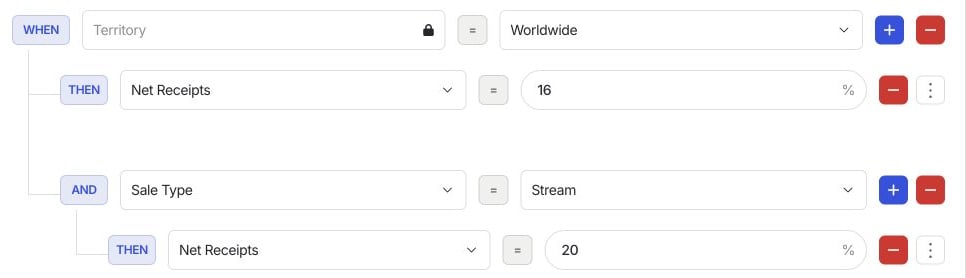
The 16% rate is the safety net: anything that fits no override falls back to it. And the order is irrelevant: put the Stream branch above or below the base rate and every sale pays exactly the same.
Territory overrides
Now the deal changes: in Germany everything pays 18%, except streams, which pay 22% there. That is a second territory rule with its own override inside: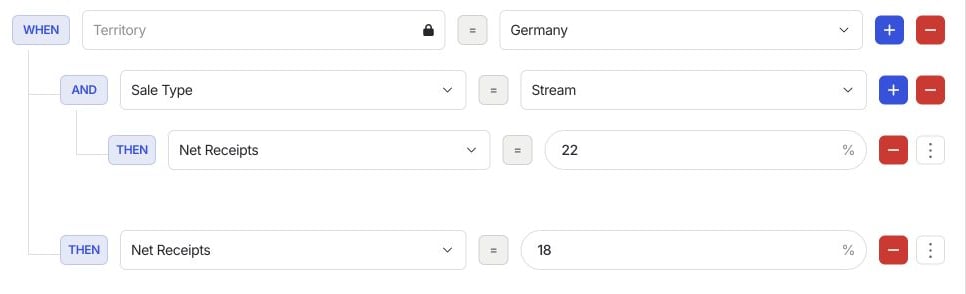
The German stream is the one worth staring at. It fits the Worldwide streaming rate too, but territory is decided first, so only the two German rates compete and the deeper one wins. That also means a German override hides the Worldwide ones: without the 22% branch, streams in Germany would pay the plain 18%, not 20%. If a territory branch should keep a Worldwide override, repeat that override under the territory.
Overrides inside overrides
Overrides can keep narrowing, level by level: sale type, then format, price category, source, and store. Say streams pay 20%, but streams reported by YouTube pay 12%. That is an override on the streaming override: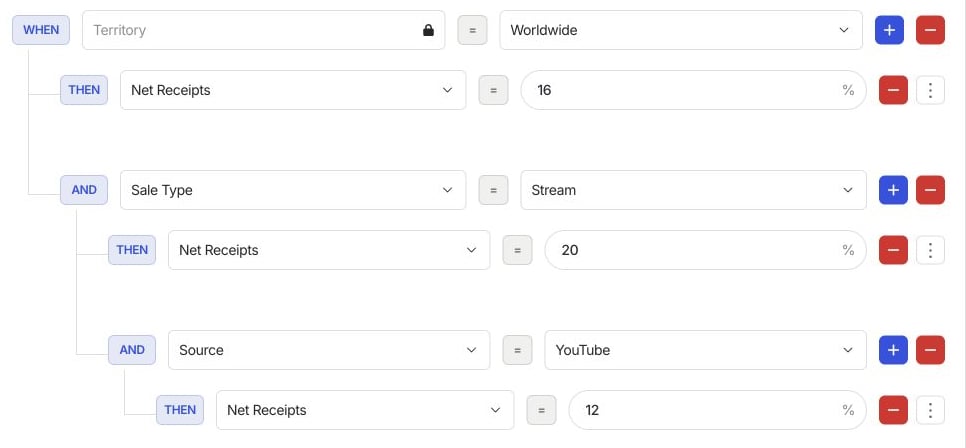
The last row is the earlier lesson again: the YouTube override lives under Worldwide, so in Germany it loses to the German branch along with everything else there.
When no rate matches
A sale that matches no branch at all is not priced: it goes to suspense with a reason telling you which level failed, such as Price category not matched in sales term, so you can extend the term and recalculate. The safety-net rate from the first example is the way to prevent that. Suspense is also why a 0% rate is more useful than no rate. To deliberately pay nothing on some revenue, give it a matching branch with a rate of 0: the sale is priced at zero and the period stays clean, instead of piling up in suspense. A deduction term that matches nothing is harmless by contrast: the sale gets no deduction.Next steps
- Build and attach the terms themselves in Creating and linking contract terms.