

- Sales terms set the royalty rate a sale pays, and are the one type every contract needs.
- Cost terms set what share of a cost is allocated to the contract.
- Deduction terms reduce the royalty rate selected by the sales term, either by subtracting percentage points from it (Absolute deduction) or by multiplying it by the percentage you enter (Relative deduction), so a 20% rate with a 90% relative deduction pays 18%.
- Escalation terms change the rate once the contract’s totals cross thresholds you define, for example a higher rate after 100,000 units.
Creating and linking terms requires write access to Agreements. If you don’t see the Create New button, ask your administrator. See User access and roles.
Creating a term
1
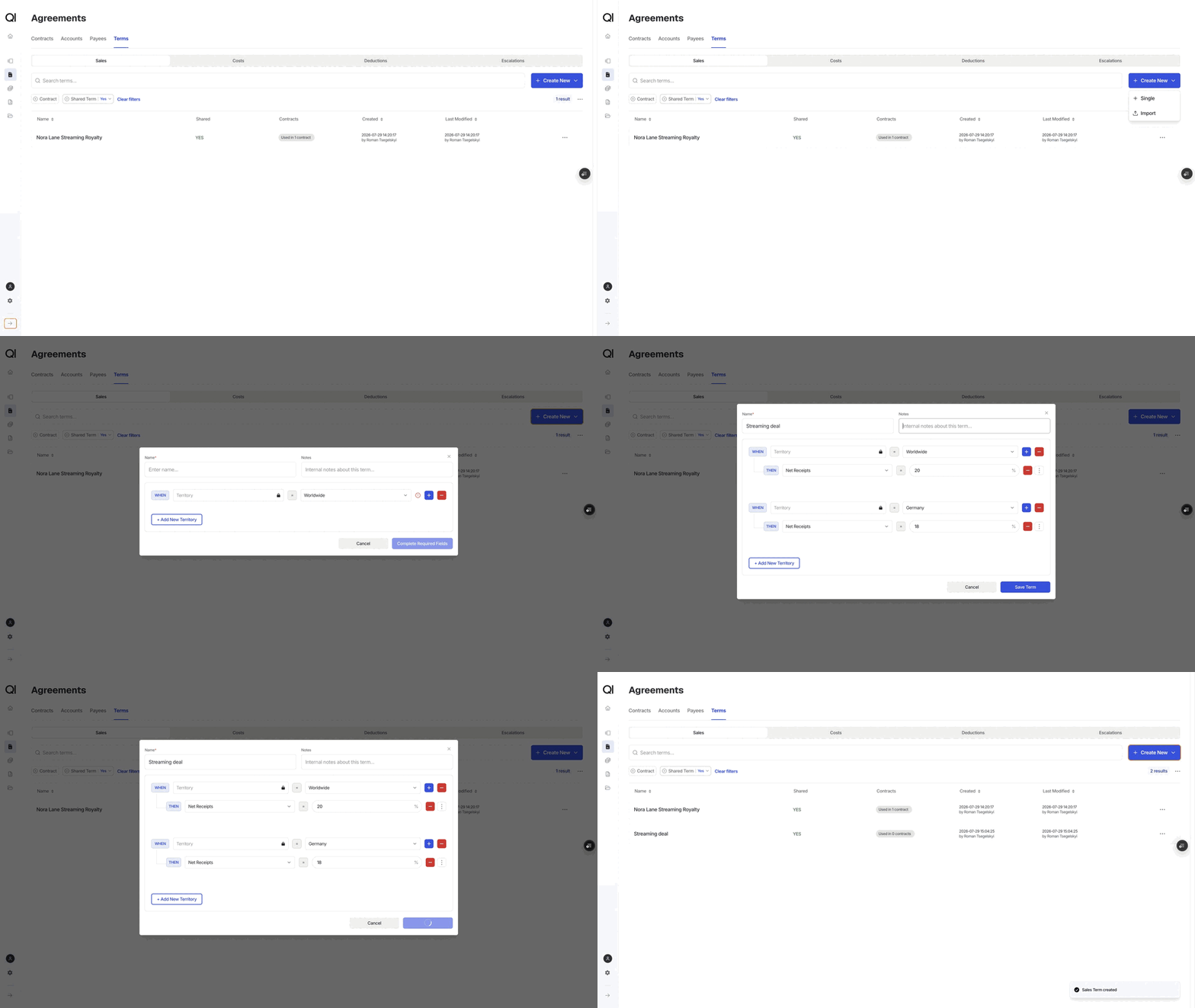
Go to Agreements › Terms
Pick the tab for the type you want: Sales, Costs, Deductions, or Escalations. Then click Create New › Single. Terms created here are shared, so any contract can use them.
2
Name it
Give the term a Name you will recognise from a dropdown later, such as the deal type it prices. Notes is optional and internal.
3
Build the rules
Each rule reads as a sentence, and the builder shows the badges to match: When a sale is in a territory, AND it meets your conditions, THEN it pays a rate.Every rule starts with When Territory =, set to Worldwide by default. From there you have two choices at every level:
- Click + to add a condition below it: Sale Type, Format, Price Category, Source, or Store, in that order. Each dropdown offers your configured values plus All, and for Sale Type, Format, and Price Category also your groups.
- Or end the branch with a rate: pick a Calculation type, which sets the sales amount the royalty percentage applies to (Gross Receipts, Net Receipts, Retail Price, Unit Price, or PPD, the published price to dealer), and enter the percentage.
- When Territory = Worldwide, AND Sale Type = Stream, THEN 20% of Net Receipts
- When Territory = Worldwide, AND Sale Type = Download, THEN 18% of Net Receipts
4
Click Save Term
The term appears in the list, showing how many contracts use it.
Link a term to a contract
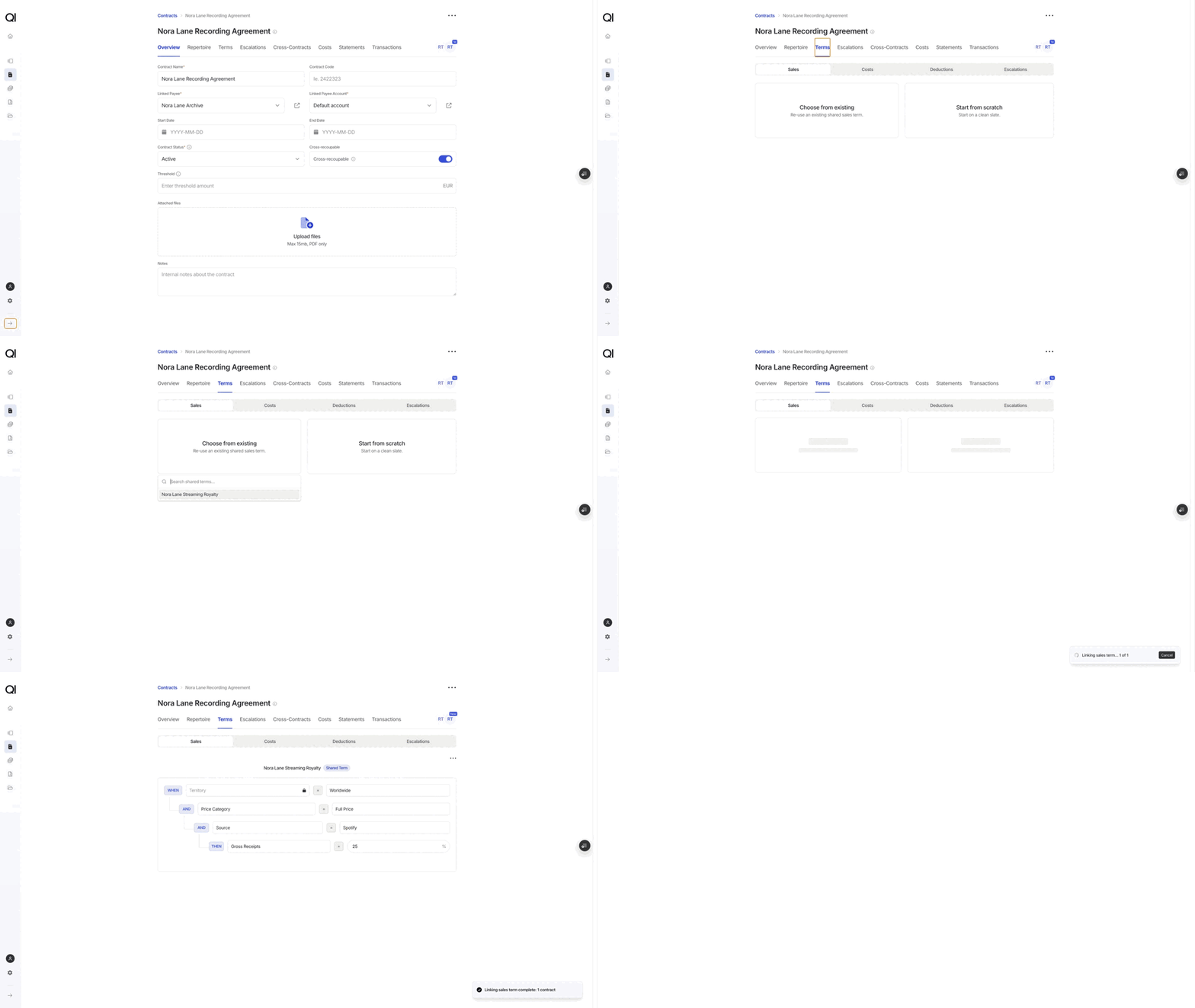
Terms attach on the contract’s Terms tab, one sub-tab per type. On an empty sub-tab you get two cards:- Choose from existing lets you pick one of your shared terms. The picker only lists shared terms, and ones already linked to this contract are greyed out.
- Start from scratch opens the empty builder. A term created here belongs to this contract alone; it is not shared and does not appear on other contracts.
Shared terms and contract-only terms
Use a shared term when a change should reach every deal that uses it, and a contract-only term when it should not. A contract-only term (created from scratch on the contract) is editable right on the Terms tab, and removing it deletes it, since nothing else uses it. A shared term shows a Shared Term badge and is read-only on the contract page. For sales, cost, and deduction terms the menu next to it gives you three ways out; a shared escalation term only offers Un-link:- Edit Term opens Agreements › Terms, where you find the term and change it for every contract that uses it.
- Un-link detaches it from this contract but keeps it for the others.
- Un-link and duplicate swaps it for an editable, contract-only copy, which is the way to customise one contract’s pricing without touching the rest.
Assign terms in bulk
To put one term on many contracts, select them on Agreements › Contracts and open Bulk Actions, then Assign Sales Term, Assign Cost Term, or Assign Deduction Term. You can pick an existing shared term or build a new one, which is saved as shared so all selected contracts can point at it. If some of the selected contracts already have a term of that type, Qlero warns you and lists them, because assigning replaces what they have. A replaced contract-only term is not deleted; it stays on Agreements › Terms, no longer linked to anything. There is no bulk action for escalation terms.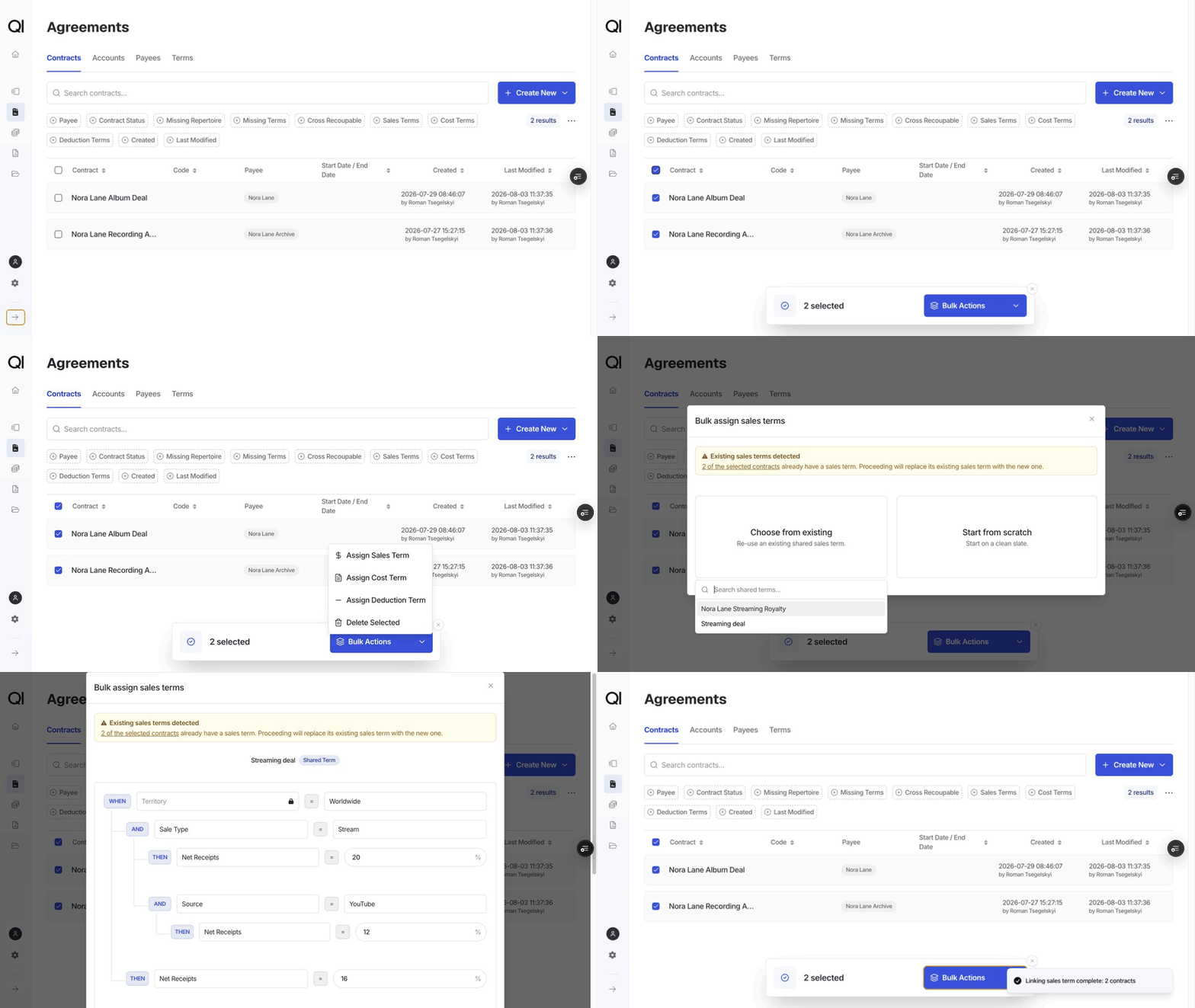
Next steps
- Understand which rate a sale ends up paying in How the terms hierarchy works.
- Create the payee, account, and contract a term belongs to in First-time setup: payees, accounts, contracts and terms.